
This evening I took the opportunity to head to the Japan Foundation in Russell Square, where Akiko Fukai, Chief Curator and Director of the Kyoto Costume Institute was speaking on the theme Japan/Fashion, followed by a Q&A discussion with Alison Moloney, Fashion Advisor at the British Council. In an introductory speech by the Japan Foundation's representatives we were informed that this was the very first time they had played host to a fashion event. Judging by the packed turnout of around 60 people in their seminar room, perhaps this will precipitate the start of more fashion-themed events to come. As the rest of the audience no doubt appreciated, this occasion offered the rare opportunity to hear from a curator working within a very different fashion and, indeed, curating culture.

Installation View Future Beauty: 30 Years of Japanese Fashion
In her brief presentation of around 20 minutes, Fukai gave us a whirlwind tour of Japanese fashion culture and its impact within Japan and beyond. Touching on the internationally recognised Japanese street style influenced by Manga, Anime, and ''kawaii'' or cuteness, Fukai also appraised the visible and invisible appropriation of Japanese aesthetics in Western culture. This ranged from the paintings of Van Gogh and Whistler, through to the ''deconstructed'' clothing of Ann Demeulmeester and Maison Martin Margiela. Through the development of Japanese designers influence on Paris fashion as showcased in the work of Hanae Mori, Kenzo, Issey Miyake, Yohji Yamamoto and Rei Kawakubo, Fukai also unpacked the three core elements Japanese design has specifically had, namely textiles, silhouette and cutting or construction. In particular the stylistic form of the kimono has influenced the pattern cutting and ornamentation of such haute couture ''greats'' as Paul Poiret, Chanel and Madelaine Vionnet. Fukai also addressed the curation of her own recent exhibition ''Future Beauty: 30 Years of Japanese Fashion'', which recently ended at the Barbican and is now being exhibited at the Haus der Kunst in Munich. Through concentrating on the chief influencers on Japanese design internationally, namely Issey Miyake, Rei Kawakubo and Yohji Yamamoto, together with a small selection of more recently established names, allowed Fukai to explore the key themes of the exhibition, including innovation and tradition in the use of textiles and silhouette, the flatness of cutting and pattern construction and the cooler, trendier aspects of ''kawaii''. As Fukai noted in her concluding comments perhaps one of the most important elements of Japanese fashion design, both in the last 30 years and today, is the ability of Japanese designers to explore and create through the co-existence of opposites, such as the seedy and the sublime, or nature versus the urban.

Jacket by Yohji Yamamoto
Following this overview of Japanese fashion culture Akiko Fukai was engaged in conversation with Alison Moloney, exploring further some of the questions raised in her talk. This conversation was extended with questions from the assembled audience. One of Fukai's key insights during this discussion was into fashion's changing status in being exhibited in art gallery context in Japan. Following similar developments in Europe, over the last ten years fashion, too, has begun to receive greater prominence in Japanese art galleries and museums, which Fukai put down not least to her own efforts and that of her colleagues at the Kyoto Costume Institute. In looking at the designers she had chosen for the recent Barbican/Haus Der Kunst exhibition, Fukai commented on how for her these designers did indeed represent Japan and Japanese-ness, even if the designer's themselves did not recognize their own work in that context. Fukai acknowledged that several Japanese designers see themselves and their work in a more rounded, international or global context, rather than as being specifically Japanese, which raises interesting questions regarding the local versus the international, or the exotic other versus the known. Further to this it was interesting to hear Fukai's thoughts on the changing fashion system, represented as she noted in the recent sacking of John Galliano by Christian Dior. As Fukai noted it used to be that recognition grew out of the talent and/or skill of individual designers, this was how Japanese designers grew to prominence during the 1970s and 1980s in Paris. During the late 1980s and 1990s, however, the power of merchandising and branding came to prominence. Today, Fukai noted how the system has changed again from the power of big name brands, to 'fast fashion''. leaving a large question mark over what will happen in the fashion industry of the future. As Fukai made clear, fast fashion needs to get its ''nourishment'' from somewhere, as it is unable to develop or recreate that for itself. As was noted by a member of the audience it appears fast fashion has won, as firms like Uniqlo grow ever larger, yet Yohji Yamamoto was recently forced into liquidation. Yet for Fukai this appeared to be too simplistic a notion, instead she asserted that perhaps the future of fashion lies in a ''return to basics'', with people deciding for themselves what they find comfortable to wear. This could be purchasing ''one off'' items, or customisation of existing clothing, yet also clothing that is easily affordable and obtainable is also included in this equation, including Uniqlo. Fukai cited their J+ tie-up with Jil Sander as a possible indicator of what the future might bring. In addition, Yohji Yamamoto is not yet totally obsolete, since his work is set to be explored and celebrated in an exhibition opening shortly at the V&A, which perhaps will help to inspire the next generation of designers attending Britain's fashion schools.

Shirt from J+ Uniqlo
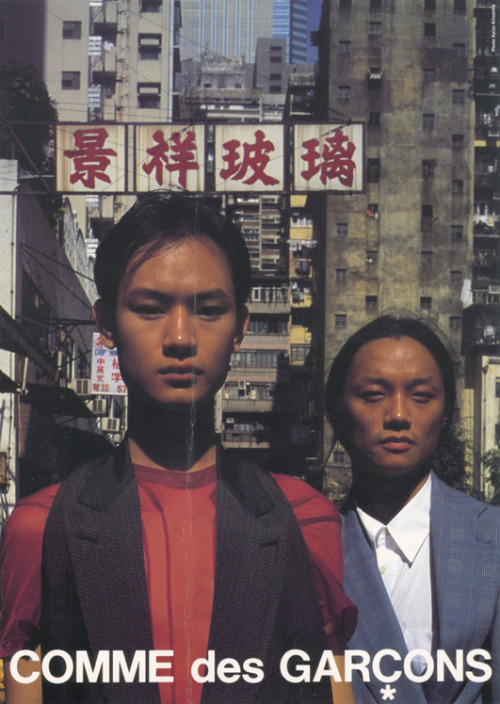
Overall, this was an interesting and lively debate in matters surrounding curation, identity, and the context and perceptions of a specific fashion culture. It will be interesting to see if the Japan Foundation decide to take this further in introducing a series of lively and topical debates on similar themes. But as for the burning question of the evening, who is Akiko Fukai's favourite designer? Well she was her own best ambassador, wearing an outfit by Comme des Garçons. As Fukai acquiesced, it is Rei Kawakubo's way of making her question that really appeals to her sensibility as a curator of fashion.
For further Information:
Kyoto Costume Institute: http://www.kci.or.jp/index.html?lang=en
Japan Foundation: http://www.jpf.org.uk/
Haus der Kunst, Munich: http://www.hausderkunst.de/


