Showing posts with label fashion as atmosphere. Show all posts

Thursday, 23 December 2010

Quote of the Month


Dinarzade or Lillian Farley photographed by Edward Steichen, 1924

‘’As I went through the door to show my first dress, I had the impression of stepping into a perfumed, silk-lined jewel casket, the atmosphere was strongly charged. The men in their correct black tailcoats with the sleek, pomaded hair; the women in gorgeous evening dresses, plastered with jewels. It was hot, so hot, and the air was stifling with the mixed odours of perfume and cigarettes.’’

Lillian Farley in Chase, Edna Woolman and Chase, Ilka, 1954, Always in Vogue, London: Victor Gollancz Ltd. pp: 166

December's quote is a recollection by Lillian Farley, sometimes better known by her more exotic moniker ''Dinazarde'', recalling her first entrance as a mannequin in a fashion show at Jean Patou. Farley was one of the six celebrated mannequins brought from America to showcase the haute couture creations of Jean Patou. Although a lesser known name today than Chanel, Patou was a fashion marketeer par excellance, and knew what a great stir he would created in ''old Europe'' by showcasing his designs on a group of attractive yet ''modern'' American women. In turn, Farley's recollection here as recorded by Edna Woolman Chase (who worked for Vogue for an incredible 50 plus years rising to become its Editor-in-Chief, assisting in the ''birth'' of the British, French and German editions of the magazine along the way) reminds us of what an ''event'' a fashion show can be and the importance of the ''performance'' aspect that fashion can provide. Here in the depths of winter with heavy snowfall disrupting or preventing travel we can now revert to the comfort and convenience of the Internet via our laptops to obtain our ''fashion fix'', yet as Farley also reminds us, there is really no substitute for ''being there'', breathing in the atmospherics of the fashion, whether that be mannequin parade, or the spectacle of dressing up for a Christmas party. None of this can be substituted by the virtual experience. Farley's recollection is also an intriguing insight into the apparently more ''civilised'' experience of the early fashion shows, where the audience, men included, ''dressed-up'' for the occasion (no scruffy photographers scrabbling around in jeans and trainers) and where the heady atmosphere of excited anticipation for the new collections was heightened by the mixed aroma of perfume and cigarette smoke. Perhaps it was this kind of atmosphere Tom Ford had in mind to re-create when he presented his first own-label womenswear collection in September, where all but his ''official photographer'' Terry Richardson was banned, and the outfits paraded in the ''closed salon'' were worn by a mixture of high-profile characters, including Lauren Hutton, Beyoncé and Stella Tennant. Does this mark the return of the fashion show as an intimate ''insider'' event, where you have to be ''in-the-know'' to attend? As with Patou, Ford too is consummate marketeer, and so it will be interesting to see if others take to offering the ''first bite'' of their new collections to only select group of fashion insiders. Although judging by some of the outfits worn by the audience in recent pictures released from this show, it would appear the audience too will need to dress accordingly to rise to such occasions.

Wednesday, 25 August 2010

A Visit to The Surreal House


Entrance to The Surreal House


Today, a visit to The Surreal House exhibition at the Barbican. It was recommend to me quite a while ago to pay a visit here, but having only just managed to get around to it, am glad I took the time. Anyone familiar with the gallery space at the Barbican will know it is often a ‘difficult’ space to fill, with a larger open space on the lower level, and a series of smaller rooms, or rather large alcoves, on the upper level, from where it is also possible to view the lower level, and vice versa. This sense of different levels and viewpoints seemed to work well, however, certainly giving any visitor the sense of having entered a kind of ‘house’ space, and offering the opportunity to view exhibits and films from differing angles. The aim of the exhibition was to showcase the links between the concept of the house and surrealism, and while many of the exhibits were certainly familiar, it was intriguing to have the opportunity to look at them again from a different viewpoint. Interestingly, there was a mix of exhibits by the ‘original’ surrealist artists, writers and designers, such as André Breton, Dora Maar, Alberto Giacometti, Salvador Dalí and Marcel Duchamp, complemented by others whose work has shown a surrealistic influence, or whose work includes elements of the surreal, such as Louise Bourgeois, Berlinde de Bruyckere, Francis Bacon, Francesca Woodman, Jan Švankmajer, Joseph Cornell, Paul Thek and Gordon Matta-Clark.


Untitled (Black Bath), Rachel Whiteread, 1996


In keeping with the ideas around the surreal, it was curious to see a number of exhibits appearing seemingly out of context, or in curious juxtaposition. Most striking perhaps was Lucien Freud’s leather desk chair, on loan from the Freud Museum in London, which was displayed alone behind a glass panel, appearing almost like a spectre, the chair of an interrogator or a torturer. Rachel Whiteread’s Untitled (Black Bath), 1996, meanwhile, certainly had the ‘’demeanour of a stately sarcophagus’’, as the exhibition blurb put it. Interested in dreams and the possibilities of dreams, the surrealists were much influenced by the use of film, and also made much use of the medium, and visitors could certainly spend much time in this exhibition exploring the various manifestations of this. I was particularly intrigued by a series of photographs by Francesca Woodman, and the theme of appearances and disappearances that was evident. Jan Svenkmajer’s films Jabbawocky and Down the Cellar, were also still startling instances of mixing the surreal with a playful, yet very dark and grown-up sense of intrigue and possible danger. In particular, Down the Cellar conveyed a sense of how we ourselves often mix these up in everyday life, making us question what is ‘real’ or ‘unreal’.
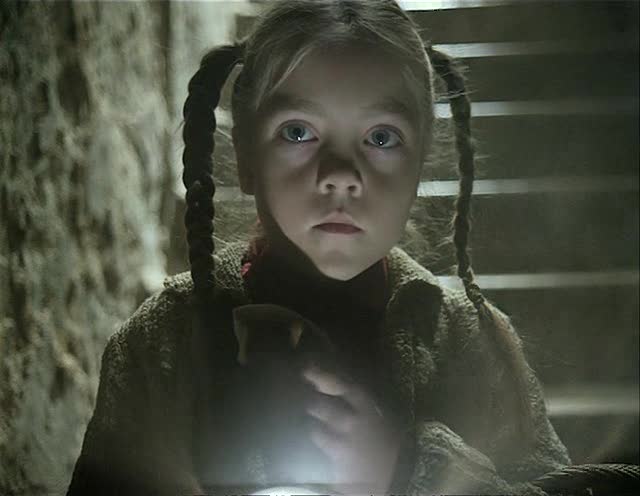

Still from Down the Cellar, Dir. Jan Švankmajer, 1982

As someone interested in fashion as a research pursuit this exhibition was again a reminder of how the collaboration between art and fashion has perhaps been most successful in their meeting through surrealism, or surrealistic elements. Fashion is often perceived to be ‘ridiculous’ or ‘absurd’, as so many media commentators on the fashion still take great delight in emphasising during the bi-annual catwalk presentations. Yet it is this very absurdity that continues to make fashion relevant as source of release from the mundanity of everyday life, which all of us need from time-to-time. The only outfits, as such, included in the exhibition were a pair of latex dresses from 1979 by Louise Bourgeois. Other ‘fashion artefacts’, if they may be called that included Alberto Giacometti’s Table Surrealiste of 1933/1969, a kind of ‘’dressing table’’, with four different legs, a veiled mannequins head and a dismembered hand. The walls of the exhibition itself were also painted grey, almost like a ‘’traditional’’ haute couture salon, or some rooms appeared in shades of pink or a deep plum/aubergine colour, and indeed the overall ambience of the exhibition could be described as ‘’chic’’, with a sense of the exhibits being both well lit and well placed. I especially liked the placing of the antique glass vitrines in several of the rooms, adding a sense of both the ‘’traditional’’ practices of curatorial display and also a play on the idea of the ‘’wunderkamer’’ or ‘’wonder room’’, or looking at ‘’an exhibition-inside-an-exhibition’’. Perhaps the most ‘’fashionable’’ exhibits, however, were a series of black–and-white prints made by Nicholas de Larmessin (1640-1725) illustrating a number of trades-people, including a lingerie seller and a miller. Their appeal as surrealistic inspiration was evident in the very bodies or outfits of the figures in the prints as they were made up of the accoutrements of their trade, even including their headwear and footwear. It is very possible to imagine how these extraordinary outfits may be realised in ‘’real-life’’ on the catwalk at Christian Dior.


Table Surrealiste, Alberto Giacometti, 1933 (1969)


Installation view of Table Surrealiste


Although not a ‘’fashion exhibition’’ per se, The Surreal House was an interesting example of how fashion permeates different areas, and also how the realm of the domestic, that is ‘’the house’’, continues to have such a profound influence. In developing my own work as a researcher through the medium of film it was also a good opportunity to view a number of films, not only to view the film-making of the films themselves, but also to engage with how film is presented. The Surreal House showed its selection of films on both large and small screens, sometimes with the opportunity to sit on a bench if the film was of a longer length. Interestingly, the section Electric Cinema, featured a miniature version of a real cinema, with plush red curtains on the walls and matching, ‘’real’’, old-style cinema seats, offering the visitor a ‘’real-life’’ cinema experience, with a series of full-length feature films, such as the surreal masterpiece La Belle et La Bête. In the creation of films, this is perhaps an aspect that is often not fully realised, yet with the growth of 3-D presentations as way of enticing and retaining people’s interest in the cinematic experience, this is an area that retains a great many possibilities to explore and consider. Echoing the surrealism and filmic quality of the day, I arrived at the exhibition on an overcast, if dry day, and left in the rain, weaving my way to the tube station without an umbrella through the labyrinth that is the Barbican complex...

Resources:

Barbican: http://www.barbican.org.uk/

Thursday, 24 June 2010

A Day Off...

As in common with my fellow F&T researchers the opportunity for 'time off' from the research seems almost an oxymoron. It seems as if there is never a day when there isn't some task to be fulfilled, such as a library to visit, an image to scan, a form to fill in, or a contact to chase up. And yet even the 'downtime' moments are important as a means to re-charge the batteries in readiness for the next hurdle to overcome. Not to mention the opportunity for some 'thinking time' just to let the mind wander, as often it is those 'empty moments' when the best ideas are allowed to form and take root.

My birthday this week proved just such an opportunity, not to mention the chance to enjoy some of the glorious sunshine London seems to be experiencing at the moment. And yet even this day provided an opportunity to indulge in the (pleasurable) research of activity of experiencing the fashionable atmosphere of my new favourite gelataria, Amorino, with friends in Soho. 'Fashion as experience' is something that is increasingly becoming an important element for fashion brands, as they seek to branch out from the sale of products, providing their customers with exhibition, eating and entertainment experiences. To this end, some of the birthday gifts I received will also endeavour different ways of experiencing fashion...not to mention the distractive possibilities of settling down with a good novel...can't quite remember the last time I sat down with a non-theory-type book!


Napkin from Amorino, perhaps the best ice-cream in London - check them out at: www.amorino.com/fr/


A bow tie - for the dapper fashion researcher about town


Look! What's this? A novel...remind me what are they for again?


Budapest - the next Fashion Capital?


Some stylish packaging


A fashion film


A well-packaged shopping voucher from Selfridges...well, I could do with some shoes...

Wednesday, 16 June 2010

Quote of the Month


A feeling for fashion in anything from architecture to typography is a feeling for what is in the air, for what is right now. I describe fashion as an atmosphere, and obviously all good designers are highly sensitive to this atmosphere or spirit of the times (particularly fashion-sensitive people who have the misfortune to find themselves just slightly in advance of this feeling suffer all the frustrations of seeing their ideas enthusiastically adopted a year or two later). Obviously, those designers who manage to hit this feeling for now are those who are successful, and who in their turn influence further generations.

Ironside, Janey, 1973, Janey, London: Michael Joseph Ltd.:pp 120

June's quote of the month comes from the highly entertaining autobiography of Janey Ironside, Head of Fashion and Textiles at the RCA during the 1960s and early 1970s. Recently I have been thinking further about the role of fashion and its place in everyday life, particularly as I am now preparing a paper on how fashion has become increasingly commoditised, being portrayed and marketed as an object in itself. In coming across this quote, researching more specifically about the role of art schools in producing fashion, I was intrigued by Ironside's description of fashion less as a tangible 'thing' than as an 'atmosphere', something seemingly un-graspable, yet which all successful fashion designers, and indeed researchers, need to grasp and interpret in some way. It is also interesting that Irondside alludes here to fashion in relation to such, allegedly, unfashion conscious sectors as architecture or typography, rather than just clothing. In capturing this atmosphere through the development of physical products, events, or perhaps books or academic papers, Ironside also re-affirms the necessity of timing in the interpretation of this atmosphere, where being 'too soon' is significantly more detrimental than being 'too late'.